
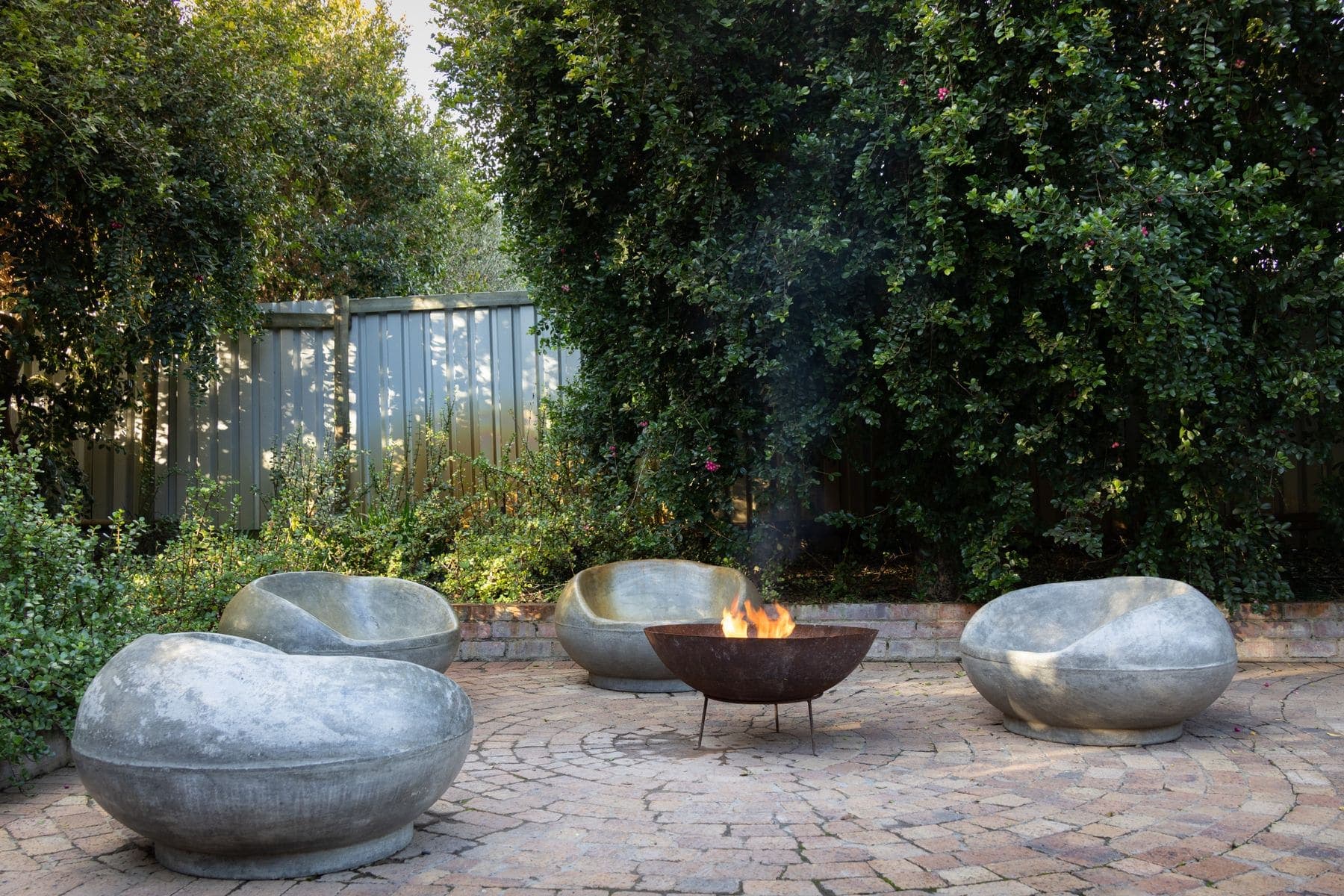
Two patios can look identical the day they are finished and be completely different projects. One is still dead flat and tight-jointed a decade on; the other has a low spot that collects water, a wobbling paver by the step, and joints full of weeds by year three. The difference is almost never the pavers. It is everything underneath them — and around here, what is underneath them is clay.
What red clay does to a patio
North Georgia clay is not a neutral thing to build on. It swells when it takes on water and shrinks when it dries out, so the ground under a patio is slowly moving through every wet spring and every dry August. It also drains poorly, which means water that gets into the assembly stays there. Our winters are mild enough that frost heave is a minor character in this story, but we still get freezes — and a saturated base that freezes even a few nights a year will lift.
So the base is not just carrying weight. It is a buffer between a stable surface and a subgrade that never fully sits still.
The patio is the base
The pavers are a wear surface. The structure that actually carries load, sheds water and absorbs what the clay does underneath is the compacted aggregate base. Get the base right and cheap pavers last; get it wrong and the most expensive stone in the yard will still move.
You are not building a patio. You are building a base and then setting a floor on top of it.
The layers, from the dirt up
A patio built to last on clay is a stack of deliberate layers, each doing one job:
- Excavation. Dig out enough native soil for the full assembly — typically 9 to 12 inches below finished grade for a walking patio, and more where the clay is soft or the lot has been filled.
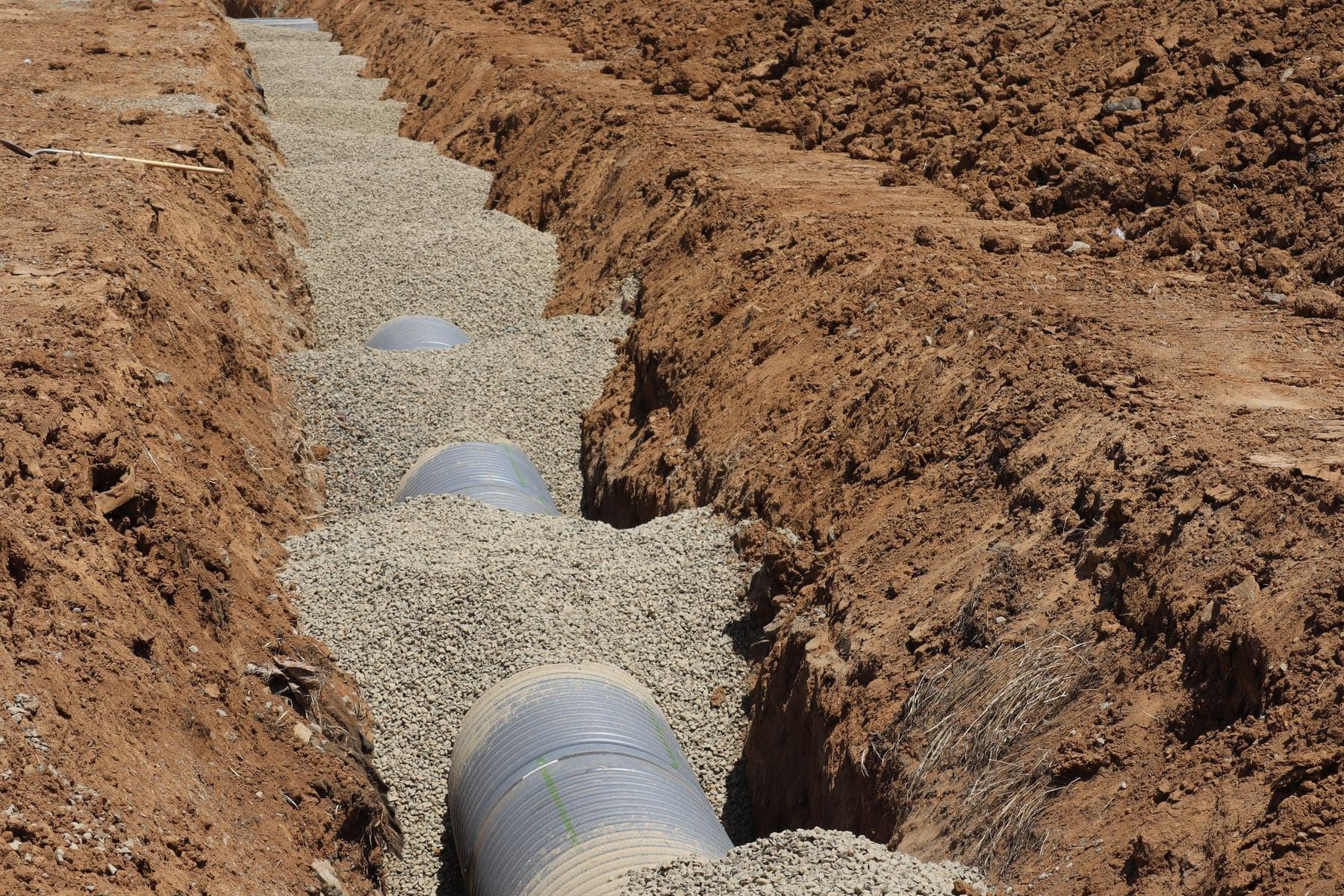
- Geotextile separation fabric. The layer people skip, and the one clay makes essential. Without it, the base stone slowly pumps down into wet clay under load while clay works up into the stone, until the two have mixed into something that is neither. The fabric keeps them apart for the life of the patio and costs almost nothing.
- Compacted aggregate base. 4 to 8 inches of angular crushed stone — graded aggregate base is the usual around here — laid and compacted in thin lifts. Compacting in one thick layer only firms the top; the bottom stays loose and settles later.
- Bedding sand. About an inch of coarse sand, screeded flat — a setting bed, never a way to fix an uneven base.
- Pavers. Set tight, tapped level, cut cleanly at the edges.
- Edge restraint and joint sand. The part that holds the whole field together — see below.
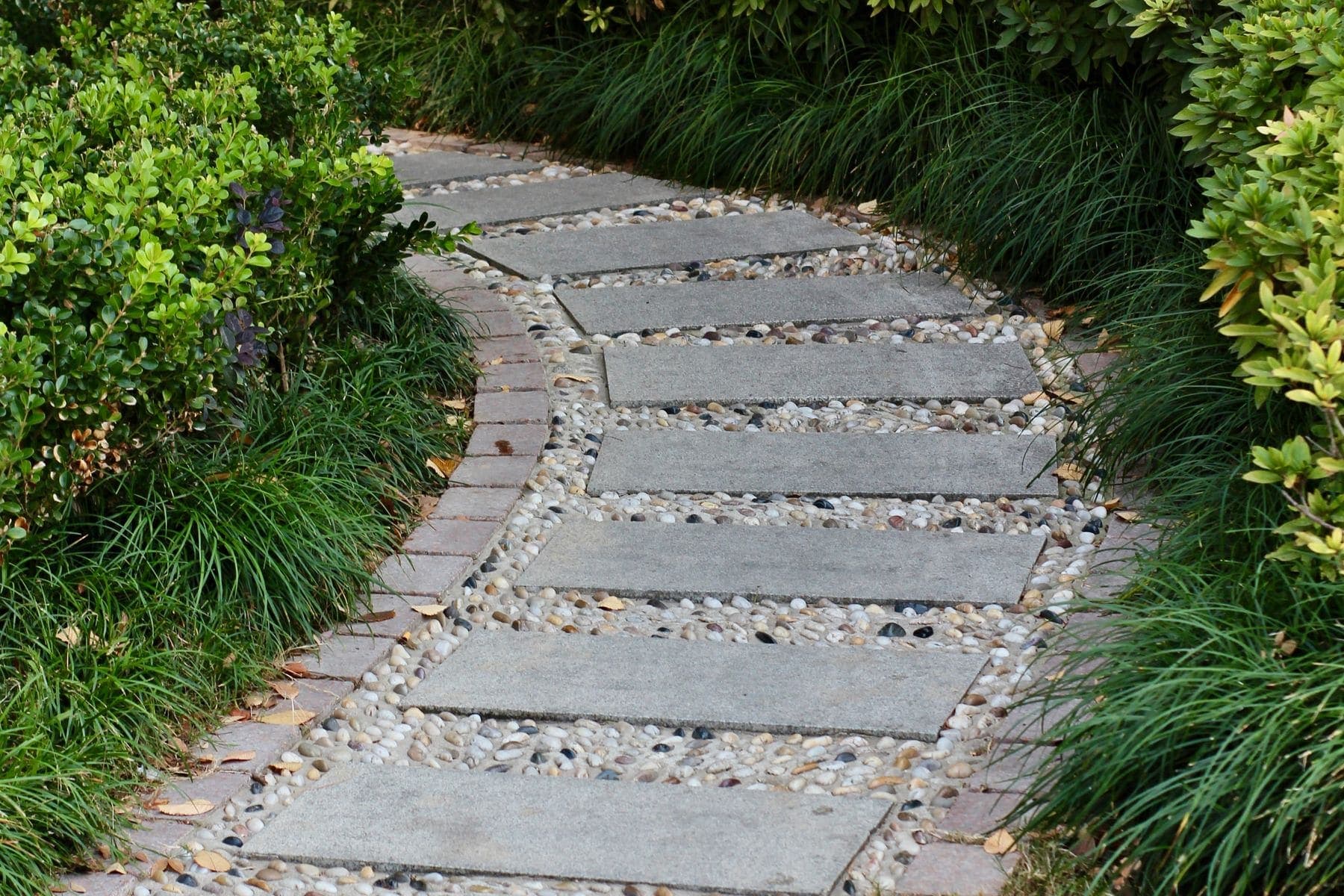
Pitch: water has to leave
Every hard surface needs somewhere for water to go, and it matters more here than the mild climate suggests. A Georgia summer storm does not deliver rain evenly over an afternoon; it drops an inch in twenty minutes and moves on. We build in a slope of about a quarter-inch per foot, away from the house and any structure, so that water sheets off instead of pooling. It is a small enough grade that no one notices it underfoot and a large enough one that the patio drains itself. A dead-flat patio on clay is a birdbath waiting for its first real storm.
Edge restraint is not optional
Left unrestrained, the outer pavers creep outward under foot traffic and seasonal ground movement, the joints open, and the field unravels from the edges in. A proper edge restraint — spiked into the base, not just the soil — locks the perimeter so the whole surface behaves as one plate. Then polymeric joint sand, swept in and set with a light misting, keeps ants and weeds out of the joints and lets the field flex together as the ground swells and shrinks instead of cracking.
None of this shows up in a photo, which is exactly why it is worth asking about. When you compare quotes for a patio, compare the base specs, not just the stone. The numbers that matter are inches of compacted aggregate and whether there is fabric between that stone and the clay — that is the part you are really paying for.
More from the journal
Let’s build something you’ll be proud to come home to
Tell VP Landscaping about your property and we’ll walk it with you — a clear plan and a fixed price, no pressure.