
Standing water is a symptom, and the cause is almost always upstream of where the puddle sits. Before anyone talks about regrading the whole yard or trenching in a drain, it is worth spending twenty minutes finding out what is actually putting water there. Often the fix is far smaller — and cheaper — than it first looks.
Rule out the gutters first
The number one cause of a chronic wet spot is a roof emptying into it. A single downspout can dump hundreds of gallons onto one square yard of ground during a storm, and a north Georgia summer storm delivers that volume in about twenty minutes. Before diagnosing the soil, walk the downspouts in the rain and see where they discharge. Extending a downspout ten feet to daylight solves a surprising share of "drainage problems" for the price of an afternoon.
Watch the yard during an actual storm once. You will learn more in ten minutes of rain than in an hour of looking at dry ground.
The usual suspects
- Downspouts. Discharging next to the foundation instead of carried away from it.
- Negative grade. The ground slopes toward the house or toward a low pocket instead of away from it.
- Compacted soil. Construction traffic or years of mowing have pressed the soil so tight that water sits on top of it. On a newer subdivision lot this is usually the whole story — the topsoil left with the grading contractor and what is left has been driven over for a year.
- Georgia red clay. It drains slowly by nature, so water perches above it after every rain rather than soaking away. Nothing you add to the surface changes that; the water has to be given somewhere to go.
- A lot that was cut into a slope. Common all through Forsyth County. The uphill side sheds everything it receives onto the flat pad the house sits on, and it arrives fast.
Fixes, from cheap to serious
The right fix depends on the cause, and they escalate in cost and disruption. Start at the top of this list and only move down as far as the problem requires:
- Extend the downspouts to daylight or to a pop-up emitter well away from the house.
- Regrade the surface so the ground carries water away — the most durable fix when the grade is the problem.
- Cut a dry creek bed to route storm flow visibly and attractively across the yard.
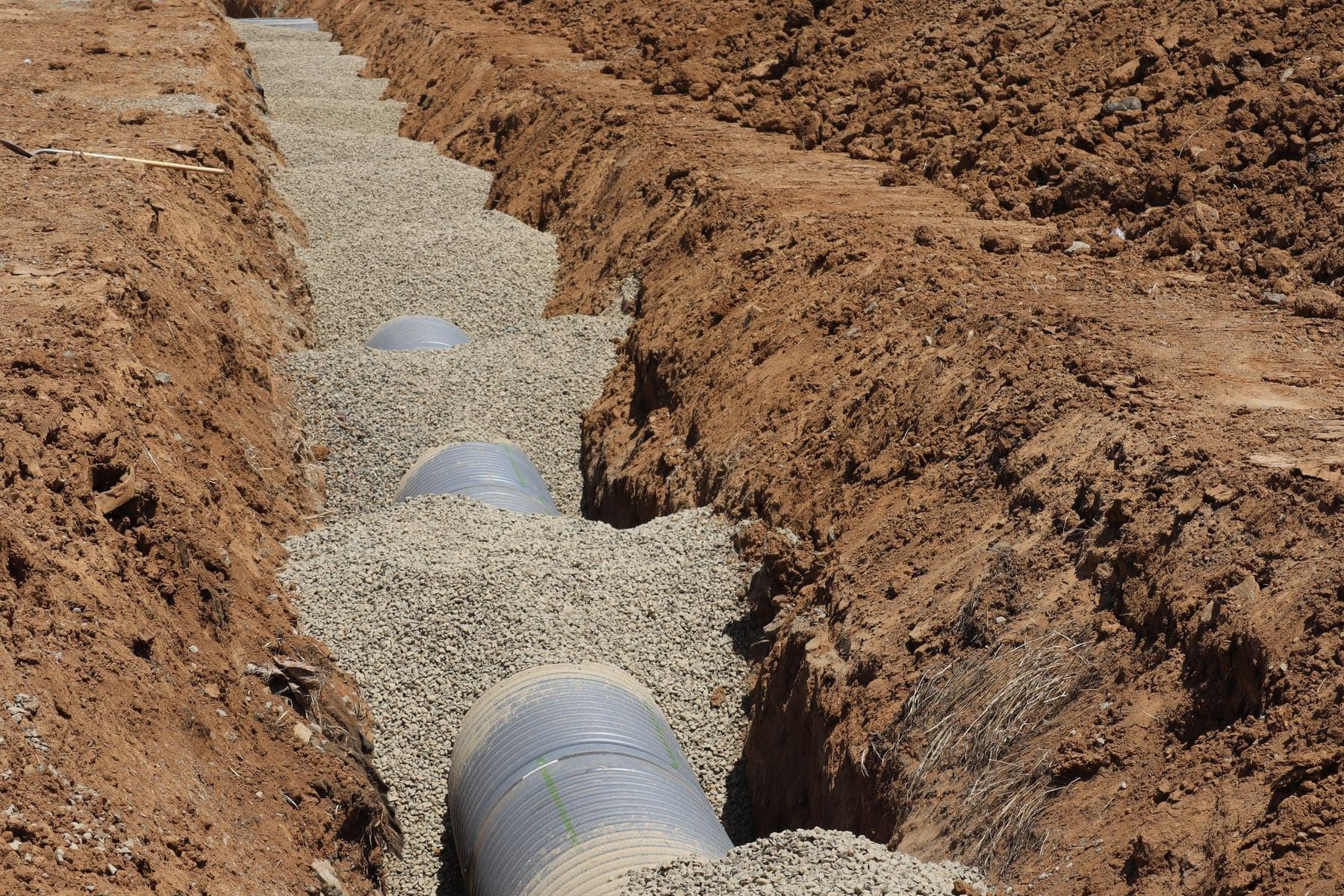
- Install a French drain where subsurface water needs a path, gravel and perforated pipe below grade.
- Add catch basins at true low points, tied into a piped outlet, for the hardest cases.
When to call someone
If water is reaching the foundation, standing for more than a day after rain, or coming back no matter what you extend or regrade, it is worth having the grade and soil looked at properly before it becomes a structural problem.
Persistent water is one of the few landscape problems that gets more expensive the longer it waits. If you have a spot that never dries, tell us where it sits and what it does in a storm and we can usually narrow the cause before we ever set foot in the yard.
More from the journal

Let’s build something you’ll be proud to come home to
Tell VP Landscaping about your property and we’ll walk it with you — a clear plan and a fixed price, no pressure.