
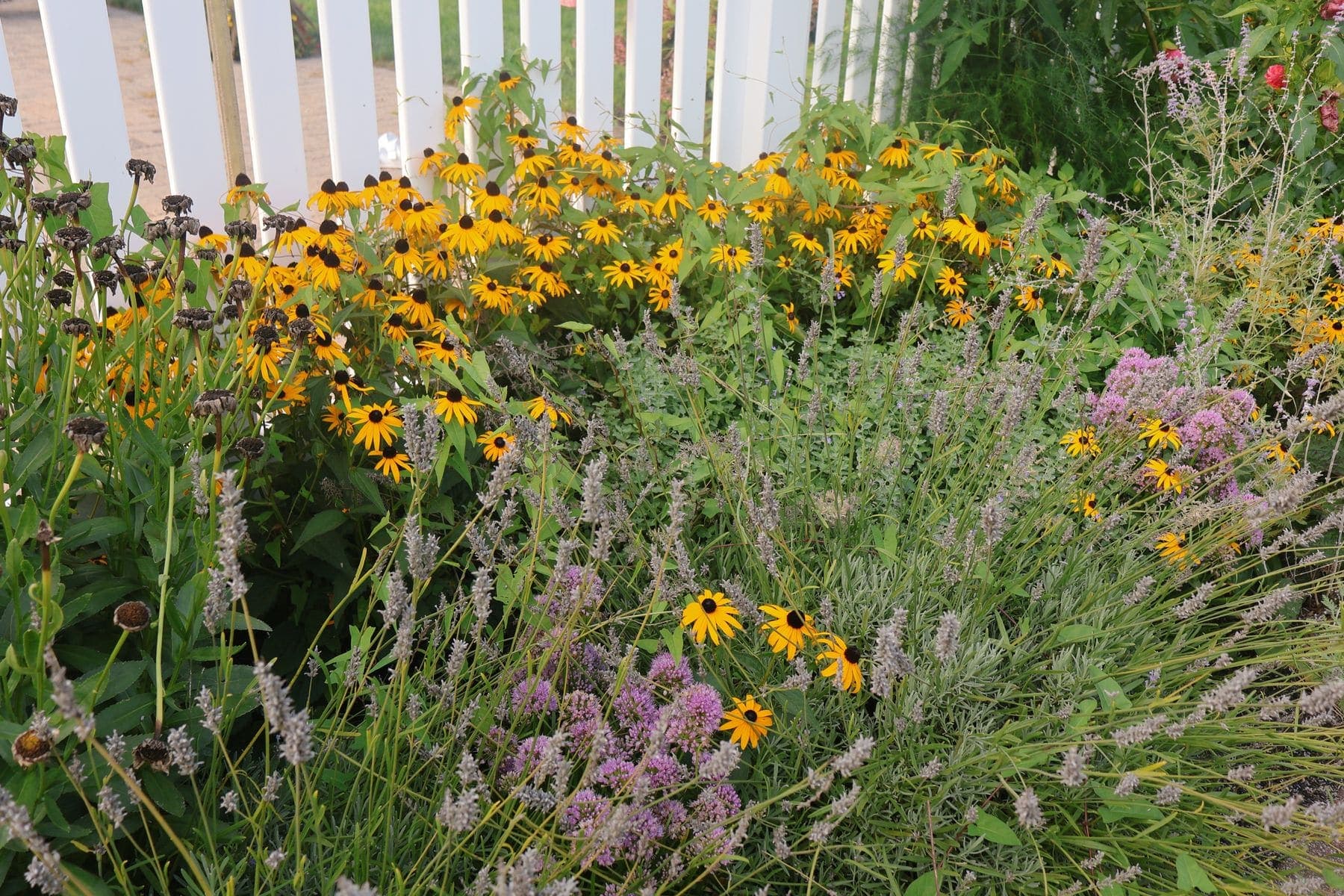
The difference between a bed that looks designed and one that looks collected is rarely the plants themselves. It is structure, repetition and restraint. Here is the framework we use to lay out a border so it reads as intentional the first season, not the third.
Structure first, flowers last
Begin with the plants that hold the composition together when nothing is blooming: evergreens and shrubs with good form. These are the bones. A useful ratio is roughly 70% structure — evergreens, grasses, foliage — to 30% seasonal color. Gardens that invert that ratio look spectacular for two weeks and thin for the other fifty.
Plant for the eleven months a bed is not at peak bloom, and the one month it is will take care of itself.
Plant in drifts, in odd numbers
One of each of twelve plants reads as clutter. Three, five or seven of the same plant grouped into a drift reads as a decision. Repeating a few of those drifts down the length of a bed carries the eye and makes even a large border feel calm and coherent.
A dependable starter palette
For a sunny bed in north Georgia — zone 7b, heavy clay, brutal August — a simple, forgiving mix that gives three seasons of interest:
- Structure: distylium or dwarf yaupon holly for evergreen mass that shrugs off the heat, plus pink muhly grass for movement and a spectacular October.
- Mid-layer: coneflower, black-eyed Susan and salvia — tough, long-blooming, loved by pollinators, and largely ignored by deer.
- Front edge: creeping sedum in full sun, autumn fern where the bed runs into shade, to soften the line where bed meets lawn or path.
Right plant, right place
The most common reason a bed struggles is a plant fighting its spot — a sun-lover in shade, a plant that wants dry feet in a low, wet corner. Match the plant to the light and drainage it actually wants and it will do most of the work itself. Force it and you will be replacing it every year.
Two things clay changes
Planting into red clay is its own skill, and getting it wrong undoes good design within a season. Dig a neat hole in clay, backfill it with bagged soil, and you have built a bucket: water runs in, finds nowhere to go, and the roots sit in it. Plant slightly high instead, break up a wide shallow area rather than a deep narrow one, and amend the whole bed rather than each hole so roots have a reason to leave.
The second thing is deer. Across most of Forsyth County they are a design constraint, not an occasional nuisance — worth choosing the mid-layer around before you fall in love with hostas.
Finally, mulch the whole bed to a consistent two inches and cut a clean, defined edge where it meets the lawn. That single crisp line does more for the "designed" look than almost any plant — it frames everything inside it.
More from the journal
Let’s build something you’ll be proud to come home to
Tell VP Landscaping about your property and we’ll walk it with you — a clear plan and a fixed price, no pressure.